

Should You Put a Humidifier System on Your Piano?
Prior to my 2018 move to Phoenix, I had spent all of my professional life in one river town or the other, and the question everyone seemed to want answered is how to better control the humidity surrounding a piano. Is it better to install a humidity control system underneath the piano? Is a whole-home system worth the expense? What about room humidifiers? Everywhere I went, I found myself answering this question.
Interestingly enough, however, my experiences in Phoenix (and the time I’ve spent with a number of local technicians, furniture store owners and performance venues) have changed my answer dramatically. With that in mind, I thought it was time to revisit the idea of humidity control around a piano and address the specific scenario of caring for your piano in the Sonoran Desert.

The Jim Brickman Experience
Five-Time Platinum-Selling Singer, Songwriter and Grammy-Award Winning Recording Artist, Jim Brickman, is returning to the Music Instrument Museum for a series of year-end concerts this December… and Riverton Piano Company is linking arms with his team to provide you an experience of a LIFETIME! How would you like to meet a legendary pianist, get a personal autograph and even have some of your own music played on HIS social media outlets?! Well now you can!
Members of Riverton Piano Company’s Piano Education Partnership (PEP) Program who purchase tickets to one of Jim’s shows will receive a FREE Jim Brickman CD and FREE access to Jim’s soundcheck – where you will meet the man himself and get your CD signed!
In addition to this incredible “meet and greet” opportunity, you’re invited to come into our Peoria store between Monday, December 9 and Saturday, December 21 to record your favorite holiday song using one of our Roland Digital Pianos. Then, keep an eye on Jim’s social media – and you’ll hear YOUR performance!
Here are the upcoming show-times:
Excited to be a part of this incredible experience? Contact Gary Gordon at (480) 905-8888 and sign up for The Jim Brickman Experience today! Gary will setup your recording time, verify your ticket purchase and get you on the list for a FREE, in-person sound check with Jim Brickman himself!
* – You do not have to purchase a concert ticket to have your Roland recording played on Jim’s Social Media. Ticket purchase is required for the in-person meet and free CD and greet at Jim’s soundcheck.
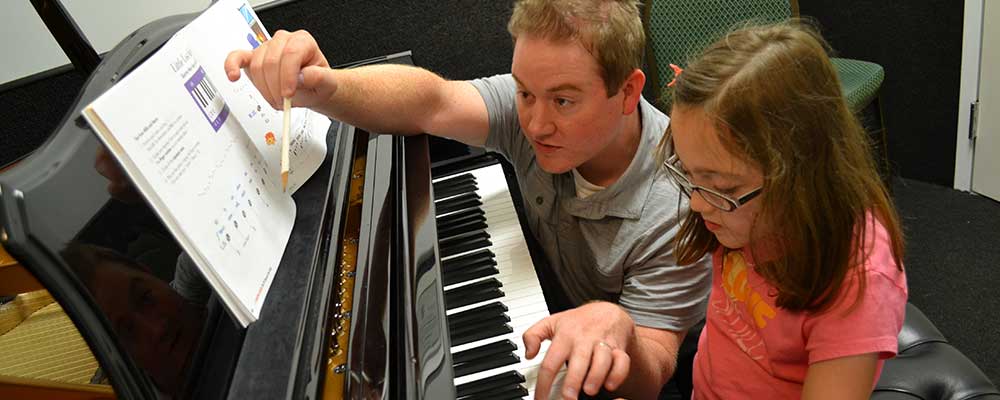
The Medical, Emotional and Cognitive Benefits of Piano Lessons
Imagine your life without music. Imagine watching a movie with no soundtrack. Imagine a long drive with nothing but traffic noise to keep you company. Imagine all the things in your life today that depend on music. Now imagine giving the gift of music to someone else. This is one of the many benefits of piano lessons!
If your imagination is up to the challenge, you can begin to get an understanding of just how important music is to our humanity. It’s the language that connects us. It’s the community that accepts us. It’s the tool we all use to measure the intangible things within. …but what you may not know is that music is more than just a social glue. It’s an important emotional and physiological vitamin that changes us – that enhances our development – from an early age. It is, in fact, the greatest medicine science has ever studied.
…and we have barely begun to understand it.
What we know, however, makes a strong case that active participation in music (not simply listening, but participating in music study of some kind) is essential to our emotional and cognitive development. It is the original “core curriculum” and we can no longer afford to ignore its impact on our society.
What is an Audio File and What Can You Do With It?

Audio files are exactly what you think they might be: a collection of sounds. For example, if you purchase a song from iTunes and play it on your phone, your phone will produce sound. Songs from iTunes, Pandora, Spotify and similar services are stored as audio files.
Audio and mp3
Uncompressed audio files are typically stored using a file format called “.wav” or “dot wave” (these were commonly found on CDs) and they are literally changing the today’s musical landscape. Modern digital pianos can read these files, giving students a chance to play along with a full band accompaniment. Not only is this much more fun than practicing alone, it also enhances listening skills, promotes even and regular tempo, and dramatically reduces the time it takes for students to learn a song. Playing along with audio files can be a great reward piece for teachers. “Practice hard and, when this song is ready, we’ll play it with a full band…” (certain Bluetooth apps can also speed up, slow down or change the pitch of audio files – in case you’re not ready to play a song at full speed.)

The CSP-Series Yamaha Clavinova digital pianos can “listen” to your iTunes songs and generate play along notation so you can play with your favorite bands even without printed music!
Mp3 files, however, are compressed versions of audio files. Most commonly associated with programs like iTunes, these files contain sound, but take up much less space than their “.wav” brothers. Many of the music books printed today come with companion audio files (often in mp3 format) that can be quickly downloaded to a mobile device and played wirelessly through a Bluetooth-capable digital piano. With the right Bluetooth app, you can still change both tempo and pitch – making these files great for learners or piano hobbyists who love playing along with their favorite bands. Some Yamaha Clavinova digital pianos even record in mp3 format so players can easily share their original music. Other models can “listen” to mp3 files and produce a play along score – making it possible to play with your favorite bands even if you don’t have printed music! This feature is called “Audio to Score” and it is available on select Yamaha Clavinova digital pianos.
Whether you’re looking for an authentic “live band” experience (with play-along apps like Sheet Music Direct Play Along) or you just want to control your party playlist from your smart phone, make sure your digital piano is Bluetooth compatible – regardless of our musical skill. All of the major lessons series (Alfred, Faber, Hal-Leonard, Bastien, etc.) have companion audio files that can help you learn to play better and faster than ever before and you won’t believe the fun you’ll have with an audio file! Why not give them a try? You might just be one click away from your next musical obsession!

Get Your Photo Taken with a WILD and FAMOUS Piano!
 Our Peoria Grand Opening celebration has begun and we’re kicking it off in style with an UNFORGETTABLE FREE photo opportunity for area piano students. Call us at (480) 905-8888 and schedule your FREE 30-minute “Baldwin Artist Piano Encounter.” You’ll meet four extremely unique pianos, including “Silverglitter” – a piano with all the glitz and glamour of Las Vegas; “Tuxedo” – a black and white formal affair that you will have to see to believe; “American Flag” – If Captain America were to own a piano… and – last but certainly not least – the Miley Cyrus piano. This breathtaking grand piano is covered in gold mirror and is one of only a handful of pianos to share time with Miley on The Silver Screen.
These instruments are one-of-a-kind and a PERFECT photo for Instagram! …so call us today and schedule your “Baldwin Artist Piano Encounter” before our time slots fill up. You won’t want to miss this rare opportunity to see and play these world famous pianos!
Riverton operates two stores in the Phoenix metro area. Riverton Piano Company Scottsdale serves the East Valley from its 2200 square foot salon on Scottsdale RD (across from the Fashion Square Mall). Riverton Piano Company Peoria serves the West Valley from its new 6000 square foot store at West Olive Avenue and the 101. This makes Riverton Piano Company the oldest piano company in Phoenix and the only piano company servicing the entire valley with two Phoenix piano stores.
Family owned and operated, Riverton Piano Company is a locally-owned business. Kevin and his family live in Scottsdale – where they are often seen organizing special events, attending concerts or delivering pianos to clients all over the Phoenix area.
Riverton Piano Company actively supports Phoenix’s major music venues, including The Phoenix Theater, The Phoenix Symphony, Arizona Opera, Arizona Broadway Theater and many, many more.
What is MIDI and Why Should You Care?
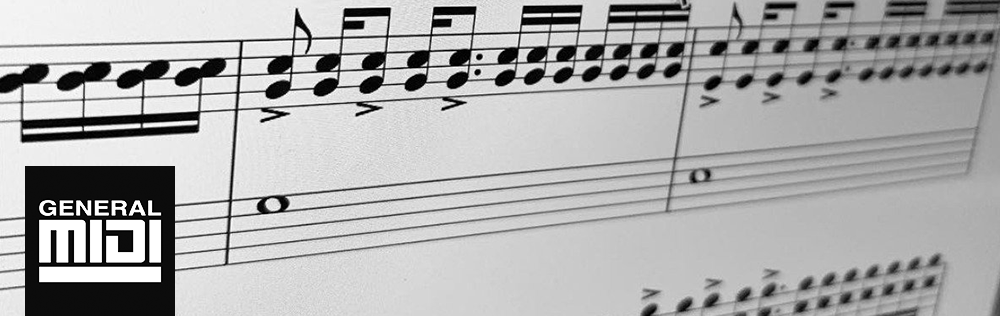
Just like people, computers are capable of speaking to each other in different languages. MIDI (short for Musical Instrument Digital Interface) is one of those languages. …and, like all languages, it has a number of different variations. Luckily, two organizations (including such famous operating system developers as Microsoft and Apple as well as famous music companies like Gibson, Roland and Yamaha) got together in the early 90s and agreed upon a “generalized” standard. “General MIDI” as it became known, allowed instruments made by different manufacturers to communicate with each other for the very first time. Thanks to General MIDI (now in its second generation as “GM2”), keyboards could speak to computers, rack-mounted control units could speak with guitars and musicians could easily translate their performances into printed score. It’s not an overstatement to say that General MIDI revolutionized the global music industry. …but to understand how, we first have to understand what it is.

The Perfect Classroom Piano
It’s no secret that technology is quickly becoming a music teacher’s best friend. Especially with today’s shrinking budgets and increasing workloads, more and more music teachers are relying on technology and software just to get through the day. As times change, our perception of the “ideal” classroom piano changes as well. …and – before we unveil our ideal instrument – let’s take a brief tour of what makes up a “perfect” school piano:
- Reliably Good Sound and Touch. No school can afford to tune or regulate their pianos as often as they should, and that means that – more often than not – your classroom piano is out of tune or has a few technical problems that prevent it from playing “well.” The ideal piano would always be in tune and in perfect playing condition.
- Sufficient Warmth and Projection. Your classroom piano will have to be loud enough to “cut through” singers and other instrument sounds. It should be warm and pleasing to the ear, but not easily drowned out by other sounds.
- Easy to Move and Amplify. Rarely is a classroom piano a stationary object. Most classroom pianos move from room to room or double as performance pianos when the need arises. The perfect piano would be easy to roll around and easy to amplify for larger applications.
- Durable Cabinet with 10yr Warranty. Pianos are not inexpensive and – especially with budgets as they are these days – your piano needs to last a long time. Ideally, a classroom piano should be built to withstand the rigors of school life and come with a 10 year “safety net” warranty.
- Record and Playback. File sharing has become a new reality in modern school systems and your perfect piano should give you access to recordings made by friends, colleges, students… and even your own! These recordings can then be used by substitute teachers, TAs or independent studies as needed.
- Budget-Friendly Price. In a perfect world, we could all have handcrafted grand pianos, but in the world of funding accountability, we rarely get a “redo.” Make sure the piano you request is affordable, but not cheap. The key word to purchasing the best equipment for your classroom is “value.” …and value = price + function + longevity.

How Often Should I Have My Piano Tuned?
Easily the most popular question my clients ask me is how often they should tune their piano. Understandably, folks who spent the money to purchase a quality instrument want to make sure the value of their investment won’t diminish due to neglect. It’s no different from a first-time car buyer asking the dealership how often (s)he should change the car’s oil. Most people understand the importance of protecting their investments. Unfortunately, while it’s common knowledge that a car requires an oil change every 3000 miles, most people have absolutely no idea how often they should tune their piano.
Unfortunately, pianos don’t have “service engine” lights to warn their owners that they are slipping out of tune. So players continue to play and nobody notices the gradual detuning. Eventually, the proverbial “frog” “boils to death” and the piano becomes un-tunable. Even worse, most churches, schools and (yes) even piano teachers fail to properly maintain their instruments. It’s hard for piano students to develop their musical “ears” because all they ever hear are out-of-tune pianos!

How to Grow From a “Just a Pianist” to a Well-Rounded Musician
Okay, first off, I know many of you are saying to yourself – a pianist is a musician. While that is technically correct, I’m talking about a well-rounded musician who can sit down with a group of other musicians and just “jam”. Let me share something that might make this easier to understand…
I started piano lessons when I was six years old and by the time I was in my late teens I could play pretty much whatever you put in front of me. It didn’t matter if it was classical, pop, jazz, whatever – I could play every note on that page. Then one day a friend of mine asked me over to his house to jam with him and some friends. I took my keyboard over to his house and there was a bass player, guitar player, a drummer, and a girl with a tambourine. We got set up and they started talking about what to play. I asked if they had sheet music for my parts. They kind of laughed and said we were just going to “jam” and try to “get a groove going”. I was really uncomfortable and didn’t know what I was going to do but I didn’t let on. Well, the drummer and bass player started playing, then my friend started on guitar, the girl with the tambourine was “going to town,” and I was… lost. I had no experience playing as one part of a group. I couldn’t hear the chord changes. I failed – hard – but I learned a valuable lesson: I was a good piano player but not a good musician.
There is a multitude of technology available today that can change all that. I wish I’d had things like –
- Ear Training APPs – These allow you to train your ear so you can determine note intervals and figure out melody lines and chord changes more easily. This is a skill you need to be a well-rounded musician.
- Automatic Rhythms – This allows to play with just a drummer or with full band accompaniment so you can get used to playing with instead of fighting against the other players. It helps you figure out ways to play less but compliment “the groove”.
- Chord Chart APPs – These get you accustomed to reading simple chord charts instead of actual notes. This is important because most playing you do with groups is based on chord charts and not standard sheet music.
- Play-Along Music – You can download just about any song and play it back using Bluetooth audio or simple MIDI files. You can even take out individual parts and transpose the music into different keys. This really helps you develop a “feel” for different music styles.
- Music Exercise APPs – These allow you to practice exercises with automated backgrounds so you can get used to hearing things you aren’t playing and fitting in. There are also exercises like Jazz Hanon and Blues Hanon that not only give your fingers a great workout, but you learn runs and progressions that you can use to spice up your playing.
- Recording APPs – These let you record what you are playing and listen to it later. Many times, I’ll listen to something I think I played well, only to find it wasn’t as good as I thought. It sounds strange, but these apps have taught me to play less while contributing more musically when playing with others.
Some of these – like automatic rhythms and recording – are features that are built in to many digital pianos. However, the top two names in digital pianos (Roland and Clavinova) – also have numerous apps like the ones above that connect to your piano using an Ipad or other wireless devices. You can find a list of our most recommended APPs on our Pinterest page. We have one for Roland APPs and one for Clavinova APPs.
Today’s technology can open your eyes and ears to a wonderful new world of music and help you find the musician within yourself. You just have to be brave enough to step away from the page – and it does take bravery. If you’re reading something note-for-note and someone says they don’t like it – you’re just reading what was on the paper. If you’re playing something you made up yourself and someone says they don’t like it – it’s a bit more personal. Still, be brave and explore. Learn and grow using the tools available today. You owe it to yourself.

Host Your Next Piano Recital at Riverton!
Riverton Piano Company is Phoenix’s musical hub. From concerts with professional pianists to the world’s most exciting themed recitals, Riverton Piano Company is the place to enjoy live music! We’ve hosted the Phoenix Piano Teachers Association (PMTA), the North Valley Symphony, Judy Carmichael, Jim Brickman, the Stefanski Brothers, Piano Marvel, and many, many more! …and our rates are extremely reasonable! Our Peoria piano store is perfectly positioned alongside The 101 at West Olive Ave. Featuring a 95-seat recital hall with a world-class grand piano and an equally professional digital grand piano, our store offers easy access for area teachers and their students (ADA compliant). For more information on this store, contact Gary Gordon at (480) 905-8888 or click the link above for more information on our Peoria piano store. Host a concert, CD signing, meeting and more at Riverton Piano Company. You and your guests will have an unforgettable experience with us!
…but contact us quickly. Recital dates fill up fast around here!
Our Peoria piano store features the legendary Bosendorfer Artisan Pianos, Premium Yamaha Pianos, used Steinway pianos, Home Yamaha Pianos, Baldwin Pianos, Schumann Pianos, Roland Digital Pianos, Disklaviers, Hybrids, SILENT Pianos Clavinovas, piano labs, print music, piano lessons, a 95-seat recital hall and so much more! From entry-level “starter” pianos to Bösendorfers, we have a piano for every style and budget. Come in today and explore!
Hours: Monday – Saturday, 10am – 6pm.


