
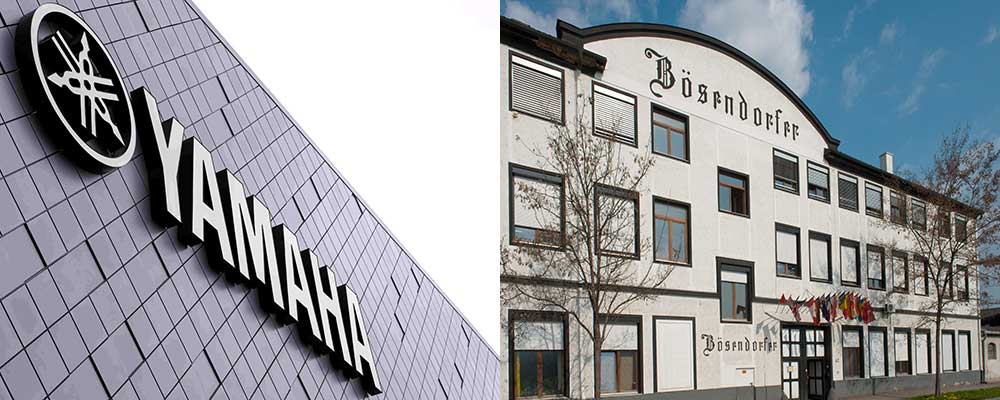
 In 2008, the Yamaha Music Corporation acquired the Bösendorfer Piano Company—a strategic move that marked a significant milestone in the history of acoustic pianos. Yamaha’s objective was clear: to solidify its presence in the ultra-luxury market while gaining deeper insights into the specialized craftsmanship of high-end piano manufacturing. For Bösendorfer, the acquisition provided unparalleled access to a premier global distribution network and the robust financial stability of the world’s largest music manufacturer.
Nearly two decades later, the results of this collaboration are evident. The partnership has evolved into a mutually beneficial arrangement that has elevated both brands to new heights of prestige and technical innovation. …but that isn’t the whole story…
Rumors and Misrepresentation

As one of the largest Yamaha and Bösendorfer dealers in the United States, Riverton Piano Company occasionally encounters industry narratives that mischaracterize the nature of this relationship. Some competitors have suggested that Yamaha’s stewardship has somehow compromised Bösendorfer’s legendary quality. Such claims often imply—incorrectly—that Yamaha’s own standards are anything less than world-class.
It is important to clarify that Yamaha’s commitment to quality is tiered to meet diverse musical needs. Their premier grand piano lines, specifically the CF and SX Series, are over 75% handcrafted using elite materials and sophisticated design protocols. Far from devaluing craftsmanship, Yamaha has consistently demonstrated a profound investment in the highest levels of piano building. …but Yamaha doesn’t just build pianos for elite performers – they also build instruments for beginners, hobbyists and families who want fine pianos and lower price points. That is why Yamaha builds five different levels of grand pianos and also why they are content to leave the design and craftsmanship of Bösendorfer pianos to the Bösendorfer piano company.
Autonomy and Strategic Support
From the inception of this partnership, Yamaha’s position has been steadfast: they serve as the financial backer and strategic partner, granting Bösendorfer the freedom to maintain its unique identity. Bösendorfer continues to benefit from Yamaha’s vast global infrastructure, logistical support, and customer service networks, yet the soul of the instrument remains distinctly Viennese. In fact, Yamaha doesn’t even maintain an office – or officer – in the Bösendorfer piano factory.
The collaboration has yielded significant advantages for both houses:
- Design Exchange: Yamaha has integrated several Bösendorfer-inspired design elements into its own CF Series, such as the Open Pinblock design, which enhances resonance and tuning stability.
- Technological Integration: Bösendorfer pianos now offer the factory-installed Disklavier Enspire Pro system. This represents a paradigm shift for the brand, as the Disklavier Pro is widely regarded as the most advanced high-resolution re-performance system in the world.
- Market Prestige: Yamaha benefits from the inclusion of a “boutique” handcrafted instrument—often described as the “Rolls Royce of Pianos”—within its elite dealer network.
Firsthand Insights from Vienna
 In 2023, I had the privilege of joining a select group of dealers on a comprehensive tour of the Bösendorfer factory and the historic Bösendorfer Salon in Vienna. The week was a deep immersion into the brand’s legacy, including visits to the Musikverein concert hall and marketing strategy sessions at the Bösendorfer Selection Hall.
During this visit, I spent considerable time with Yamaha representatives whom I have known for many years. Our discussions confirmed the initial promise made at the time of the acquisition: Bösendorfer operates as a fully independent subsidiary. There are no corporate restrictions on manufacturing processes, material selection, or design philosophy. Yamaha’s role is to empower Bösendorfer’s artisans, not to replace them.
Looking Toward the Future
The nearly 20-year collaboration between Yamaha and Bösendorfer has created a powerhouse of innovation and tradition. Both companies are now better positioned than ever to lead the industry in piano manufacturing and artistic expression… and I would be very wary of anyone – or any business – who suggests otherwise. The truth is easy to see.
We are proud to represent these two iconic brands and look forward to the next chapter of their shared history. If you would like to discuss the technical nuances or the heritage of these instruments further, we invite you to contact us. We would be honored to share the reality of this extraordinary partnership with you in person.


Congratulations on a really informative post.
Ihave the privilege of working with Coachhouse pianos in the U. K. The main dealer for Bosendorfer and I am responsible for preparing them prior to sale ans delivery. They are of course a joy to work on . My only misgiving is that since Steinway bought Renner, it seems the new choice of hammer has changed the character somewhat, and they seem to me ,less amenable. An opinion would be valued
Hi, Andrew! Thank you for stopping by and for your thoughts. I can understand your concerns with Renner, but they have always made a custom hammer for Bosendorfer and – while Steinway does own Renner nowadays – the company still sells action parts and hammers to a number of other piano brands, including Bechstein, Bluthner, Fazioli and more. I admit that I am not a technician myself, but I would suggest that much of what you’re seeing is a result of felt recipe changes for Bosendorfer’s Vienna Concert series. The VC pianos have a different character and, thus, need a different type of hammer. They still have that Viennese personality (if you will), but with greater projection and warmth. Our techs haven’t complained about the hammers being harder to work with, but I will comment again if I hear anything! Thanks again for your question and best of luck in the UK!