
If you’ve ever encountered a piano that was so horrible, you couldn’t even call it a proper piano, you’ve encountered a “Piano Shaped Object” (or PSO for short). PSOs can show up when you least expect them – in your church, in your school, in a practice room… or even in a piano teacher’s studio! …and – while the term may sound lighthearted – it describes a serious problem for piano shoppers. PSOs look like regular pianos. They have 88 keys. They have pedals. They have a bench. They might even have beautiful cabinets! …but – underneath it all – they are horrible instruments that can not only damage a student’s playing technique, but even cause a student to quit piano lessons. In fact, in a recent nationwide study of why piano students quit taking piano lessons, an inferior practice instrument rated #1. So how can you identify and avoid a PSO before it ruins your student’s musical future? Thankfully, we can help you with that.

This is a spinet piano. Spinet pianos are less than 40″ tall. They have no value and make poor lessons pianos. You can often find them free.
What Defines a Piano Shaped Object?
PSOs present in a variety of different ways. They can be:
- Good quality pianos that have passed their “end of life” date.
- Poor quality new pianos that were never meant for lessons or serious players.
- Abused instruments that have serious – sometimes hidden – problems.
- Neglected pianos that haven’t been serviced in so long they can’t be properly repaired.
- Cheap electronic keyboards that don’t offer proper tone and touch.
- Old digital pianos that no longer provide a proper performance experience.
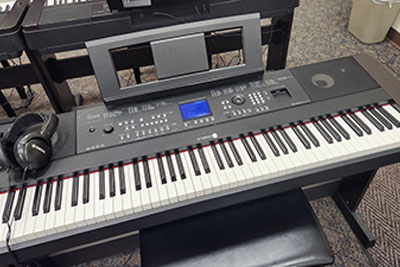
This old keyboard has a spring-loaded key action. By now, many of the springs are no longer tight and the keyboard has a poor, uneven feel.
Where Am I Likely to Encounter a Piano Shaped Object?
PSOs can appear anywhere, but here are a few common places to find them:
- Facebook Marketplace – Many piano owners don’t know how to properly care for their piano so they might think it’s “in great shape” when it’s past end of life or so tragically neglected that it won’t tune to pitch anymore.
- College Practice Rooms – Practice room pianos, in particular, take so much abuse over the years that they are completely unplayable by the time the school decides to part with them. These discarded pianos have no value to anyone except rebuilders.
- Old Church Pianos – Often used pianos that were donated to the church in the first place, these neglected and abused instruments often won’t hold a tune or provide the proper action resistance students need for lessons.
- Homeowners – Again, few people understand how to properly care for and maintain their pianos. We’ve seen PSOs in garages, storage sheds, living rooms and back yards.
- Piano studios – Some piano teachers have old instruments that they no longer use or only use in rare circumstances so they don’t maintain them properly. Some piano teachers even offer low-quality keyboards as loaners to beginners – hoping it will entice families to take lessons with them long enough to upgrade.
-

Words like “restored” or “rebuilt” have little meaning without context. If you are considering a used piano that someone has worked on outside the factory, it’s important to ask questions. Who did the work? What are that tech’s qualifications? What kind of parts did (s)he use? Does (s)he warranty the work and – if so – for how long? Don’t let a used piano seller convince you the piano is “like new” when all they did was polish the cabinet.
Piano technicians – This is probably a whole blog in and of itself, but piano technicians sometimes take in old, poor quality or imported pianos that were never seasoned for American homes. They’ll polish them up, sand the hammers and sell them for pennies on the dollar… but – inside – a time bomb ticks. Also beware rebuilders who can’t or won’t tell you what *specific* work they have done. They can replace old factory parts with cheap OEM parts that will ruin the piano’s sound and touch.
- Piano Dealerships – This one is a hard one to admit, but some piano dealers import such poor quality instruments that the only positive thing one can say is: They’re pretty and cheap. They’ll harm your piano experience, but at least they look nice in the living room!
As you can see, PSOs are far too common in the US these days. Old used pianos that have passed “end of life,” poorly-built pianos, cheap keyboards and mysteriously “restored” pianos have flooded the market and many of these instruments can easily cause you or your student to quit taking piano lessons!
How Can I Identify and Avoid PSOs?
Now that you know WHERE to find them, here are some quick strategies for identifying and avoiding them:
- Buy a piano from a reputable piano store.
- Get a piano warranty.
- Have a technician evaluate your piano
 Look for these things:
- Soundboard condition. Look for cracks or no crown.
- Tuning pinblock torque. The pinblock is crucial and will determine the tuning stability of your piano, and how often it will need to be tuned.
- Action stability and evenness. Make sure the action isn’t too loose or too stiff, and that it is responsive, especially for fast passages and playing pianissimo.
- Hammer felt condition. Good hammer felt will help produce better sound and possible future voicing capability.
- Pedal functionality or lack of pedals. Pedals wear out and need servicing periodically. Check for squeaks, mechanical noise or if the pedals are too loose and not functioning properly.
- Rim delamination or cracks. The rim can delaminate over time, and this is a huge structural issue.
- Improper key length, height and improper key weighting. Check the action for discrepancies.
- Improper sympathetic resonance. Check for buzzes, extra resonances and vibrations.
If you can’t identify these things yourself, have your tech or a Riverton Piano Pro help you explore them. It’s worth whatever small fee they might charge to get this right!
Finally, here are a few other important things to request from a piano dealer.
- Get a trade-up plan.
- If the piano has been worked on or restored, get a specific list (in writing) detailing what has been done and which parts were used. Ask for a warranty for the piano and the work that been performed on the instrument.
- Or consider a good “rent to own” plan instead of a purchase. This might make sense until you can budget a larger amount for a good quality acoustic piano.
 Why Should I Avoid Piano Shaped Objects?
Once you’ve identified a PSO, you can politely decline to purchase the instrument and search elsewhere. The quality of your practice instrument will directly impact your piano experience, your progress, and the success of your practice sessions. A PSO can cost you a fortune to restore, tune and maintain. In some cases, they may even cost more than you would spend on a good quality new piano! Pianos must be maintained, and if the piano is not structurally sound and doesn’t hold tune, then you will be faced with spending needless money on a piano that should have been retired instead of being sold.
What Should I Purchase Instead?
It’s important to purchase the best quality instrument you can afford – even if that instrument is a digital piano or a good quality used piano. That’s why it’s so critical to avoid Piano Shaped Objects. Purchase a piano that you envision you or your family playing for many years, rather than buying something for just the present, and you shouldn’t need to purchase more than 1-2 pianos in your lifetime. Get the best piano you can fit into your budget – even if you have to stretch that budget a bit. These pianos will perform better and hold their value better over time. Nobody ever regrets buying a good piano, but plenty regret buying a piano shaped object! Need help making a decision? Contact us today and we’ll be glad to offer you some friendly advice!


