
 People don’t set out to make a bad piano purchase.
They start with good intentions, a reasonable budget, and maybe a quick internet search for used pianos. An hour later, they’re staring at a 30-year-old upright on Facebook Marketplace, wondering if they’ve just found a hidden gem… or if they are about to inherit someone else’s problem.
Here’s the reality:
A piano isn’t like buying a couch or a TV. It’s a mechanical instrument with thousands of moving parts, and its value has less to do with how it looks—and everything to do with how it’s been treated over time.
That’s why two pianos that look nearly identical can have completely different stories:
One plays beautifully and holds its value; the other struggles to stay in tune and gradually drains your wallet… so, before you decide to purchase any piano (new or used), you need to understand what actually matters—and how to avoid bringing home a lemon.

One of the first questions every piano buyer asks is:
Should I buy a new piano or a used piano?
Some used pianos can be incredible instruments at lower-than-new pricing. They can also become your greatest nightmare. I remember a piano teacher who purchased a used Yamaha grand piano from a less-than-reputable dealer because she didn’t have the funds for a new one. In her mind, she was getting a great quality instrument that – though a bit older – would still fulfill her needs from well within her budget. By the time she got it home and discovered all of its hidden technical problems (none of which the dealer agreed to resolve as part of their used piano “warranty”), she realized that she would have to spend thousands more to make the piano playable or lose thousands of dollars selling it “as is.”
Sometimes you get a great companion.
Sometimes you get… unpleasant surprises.
Unfortunately, it’s very hard to tell the difference in most cases. That’s why we always recommend having an independent, Registered Piano Technician (RPT) evaluate your used piano before you buy. …but – if you’re considering a used piano on your own – here are a few things you should look for:
The Piano’s Age

A lot of people assume older pianos are “better,” but that is rarely true.
There’s no such thing as an “antique piano” – only an “old piano.” Pianos are machines made of wood, felt, and steel—all of which wear out over time – especially if not well maintained.
General guidelines:
- Under 30 years → usually safe
- 30–40 years → depends on care
- 40+ years → proceed carefully
- 60+ years → restoration project, not a casual purchase
How does a piano’s service history affect its value? Well, a 20-year-old piano that’s been well-maintained will outperform a 10-year-old one that’s been ignored. This makes it more desirable and, thus, worth more money to savvy buyers.
 The Piano’s Role
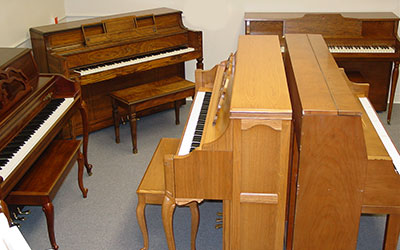
Pianos used (or – as is often the case – used up) in high-stress environments like university practice rooms, school classrooms or churches will likely show intense signs of wear. They will likely need new parts and a ton of restoration work to make them perform as designed again.
Gently used home pianos, however, are usually in very good condition even if they are decades old.
It’s important to learn what the piano was used for before you bring it home.
Tuning History: The Deal-Maker (or Deal-Breaker)
 If you remember one thing from this article, make it this:
Ask when it was last tuned. Also, read “How Often Should I Have My Piano Tuned?”
- Tuned every year → green light
- Tuned occasionally → yellow light
- “It hasn’t been tuned in… a while” → red flag
Remember: “it’s hardly been played” usually means it’s hardly been tuned. Read “What Causes a Piano to Go Out of Tune?”
A piano that hasn’t been tuned in years doesn’t just sound bad—it may not hold a tune anymore. Fixing that isn’t a quick service call. It can get expensive fast.
Cabinet Condition: More Than Just Looks
 Buyers often focus on scratches or “dings,” but those are the least important things.
What actually matters:
- Water damage
- Warping
- Structural issues
Why? Because these can indicate that the piano is so badly damaged that it can’t be made to perform as designed ever again.
Pianos hate:
- Garages
- The Arizona Heat
- Humidity changes
(If a piano has lived in a garage in Phoenix… let’s just say it doesn’t have a bright future.)
What a Used Piano Is Really Worth

Used piano pricing is all over the place because condition is everything.
That’s why you’ll see:
- Free pianos online (Read “How Much do FREE Pianos Cost?”)
- Huge variances in online “asking prices”
- Higher prices at reputable outlets
The difference isn’t luck or greed—it’s maintenance.
New Pianos: No Surprises, No Guesswork
Now let’s talk about new pianos.
They’re not “cheap”—but they are more predictable, or – put another way – more reliable. Here are the main considerations when evaluating new pianos:
Reputation Matters

This isn’t the place to roll the dice. When you purchase a new piano from a reputable dealership, you not only end up with a top-quality instrument, you also end up with a dealer partner who – thanks to Google Reviews – has a vested interest in your success.
Good piano dealerships offer:
- A variety of good quality instruments in all budget ranges
- Warranty Support (Read “How Important Are Piano Warranties?”)
- Trade-Up plans or resale support
When you buy a high quality piano from a reputable dealership, you’re not just buying a piano—you’re buying confidence and value protection.
Performance Quality: Everything Works (Like It Should)
 This sounds obvious, but it’s huge.
With a new piano:
- The action is properly regulated
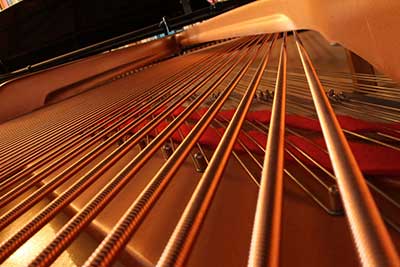
- The strings are fresh
- The tuning stability is solid
- The tone is consistent
Translation: you sit down, play, and everything sounds and feels… right.
No quirks. No surprises. No “it just needs a little work.”
Pricing Stability and Predictability
 Yes, good quality new pianos often cost more upfront, but they eliminate surprises later, including:
- Immediate service costs (multiple tunings, regulation, voicing, action repair, etc.)
- Hidden structural issues
- Surprise soundboard cracks or buzzes
Even better – in the unlikely event that one of the above should develop after delivery, your new piano warranty will insulate you from the associated repair expenses!
New Pianos vs. Used Pianos: The Honest Answer
Choose Used If:
- Your primary consideration is budget related.
- You know what to look for (or are willing to hire an RPT who does).
- You find one that’s been properly maintained or comes with a reputable dealer warranty.
Choose New If:
- Your primary consideration is performance related.
- You value reliability and warranty support.
- You plan to move at any point in the future.

Either way, the key to a successful piano purchase is good, detailed, reliable information. Make sure you learn as much as you can about your prospective piano purchase before you sign “on the dotted line.”
If you’re not sure whether a used piano is worth the asking price, don’t wing it. Have it evaluated. Ask questions. Or better yet—work with someone who deals with this every day.
Because the goal isn’t just to buy a piano.
It’s to purchase an instrument that will help you and your family enjoy your music for years to come!
At Riverton, we take that responsibility seriously and we’d be happy to help you evaluate any piano – even if it’s not on our showroom floor. Contact us today and let us help you find your perfect piano!


