
Yamaha Holiday Promotion 2026
Yamaha Pianos Holiday Promotion
This Holiday Season, give your loved ones something they’ll treasure for years to come: the gift of music from Yamaha.
October 29 through January 4, 2027, enjoy 0% APR for 24 months on select Yamaha pianos.*
We invite you to come in to see our entire selection. Virtual or private visits are also available.
Happy Holidays from Our Family to Yours!
They were born with a gift. Help them unlock it this Holiday Season.
PRESS HERE to Browse Yamaha Pianos
*Additional terms apply. Subject to credit approval. Financing by Piano Credit Company, a Division of United Midwest Savings Bank, N.A. 0% APR for 24 months on qualifying purchases October 29, 2026–January 4, 2027, $41.67/month per $1,000 financed (may vary). At participating, authorized Yamaha dealers only. Select, new piano models–subject to availability. See retailer for details.
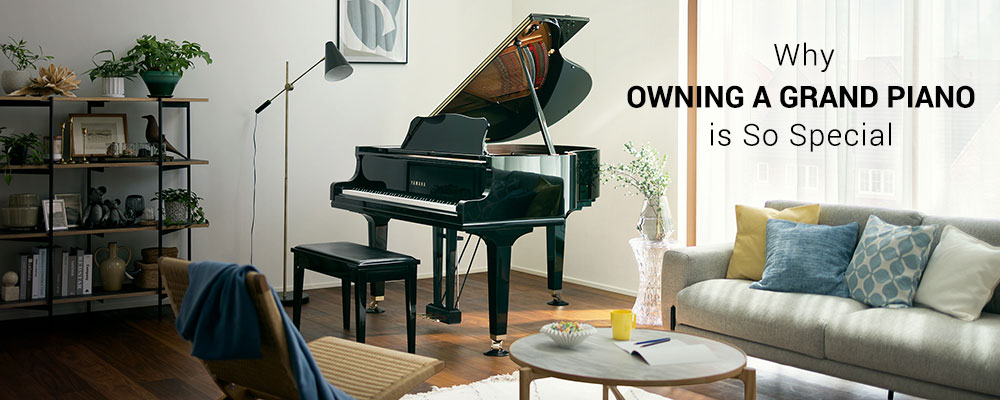
Why Owning a Grand Piano is so Special
We fill our homes with meaningful things that add enjoyment to our lives and help us build life-long memories. A dining table becomes the place where we celebrate birthdays, play games, and build our familial bonds. A kitchen becomes the room where we share generations of family recipes and all our favorite desserts. …and the piano becomes the place where we gather, grow, celebrate and remember. Few things in life matter as much to us as our “family piano” – especially if that piano is a grand piano.
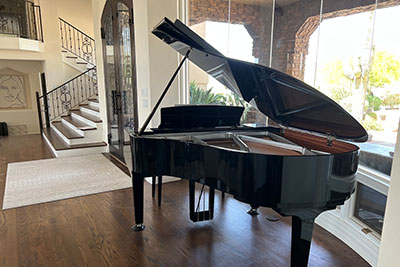
A grand piano immediately becomes the centerpiece of any living space. It makes a statement before it ever makes a sound.
Picture a grand piano in your home. Perhaps it sits in its own corner of the living room – stately and reliable. Someone walks past and sits down to practice a piece they’ve been working on all week. You hear the same few measures again and again—and then, one evening, they finally get it right. Years later, you may not even remember exactly what they played, but you’ll remember how it felt when they finally “nailed it.” You’ll remember watching them learn. You’ll remember the family gathered around the piano during the holidays, singing songs together. You’ll remember a brother or sister sitting beside you for a duet. You’ll remember the impromptu performances, the birthday songs, the church hymns, the quiet evenings when someone played simply because they felt like it. You’ll remember how your grand piano made your entire home feel as it filled the air with music and joy.
…but what, specifically, makes a grand piano so special? Why is that – above all other instruments – the world’s favorite musical experience? …and what is it about owning a grand piano that makes you feel so good – even if you don’t play?! The answer may be as diverse as piano owners themselves, but there are a few common threads – some of which may surprise you.

What AI Gets Wrong About Buying a Piano
If you’ve ever tried to call a large company or chat with Amazon, you know that Artificial intelligence has changed how people shop for just about everything. In fact, most companies hide it so well you might not even realize you’re using it. Do a simple Google search – or ask “Siri”:
- “Which piano builder builds the most pianos?”
- “What should I pay for a 1995 Yamaha C3?”
- “What’s the best piano for a beginner?”
- “Yamaha vs. Kawai—which is better?”
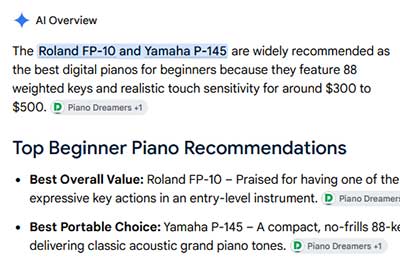
There are a number of problems with this answer. We didn’t ask for digital pianos or keyboards. We asked for the best piano for a beginner. Google’s AI assumed we wanted the cheapest option and showed us what an obscure digital piano website called “Piano Dreamers” recommended.
In seconds you’ll get an answer that sounds like it came straight from someone who’s spent 30+ years in the piano business. …but you’re not. You’re getting an answer that a specially-designed computer program has pieced together after compiling data from websites all around the world – many of which present outdated, distorted or even false information. The problem is, this computer program can’t reason. It doesn’t “think.” It has no way to recognize bias, misinformation or obsolete data.
And that is exactly where the trouble starts.
Alexa, Siri, ChatGPT, Gemini, Google’s “AI Overview” – all can be great research tools when you need to summarize large amounts of information – especially when you can cross-reference their responses with more reliable information sources. …but – just like any other experimental tool – it can malfunction – especially if you use it in the wrong way. Worse yet, AI doesn’t understand subtlety. It will present its mistakes with absolute certainty – leaving you to determine what you can and cannot trust.
So how do you get to know this new “Internet Librarian” so you can get valuable information from it without getting into trouble down the road?
That’s the tricky part.
The Truth About Gray Market Pianos
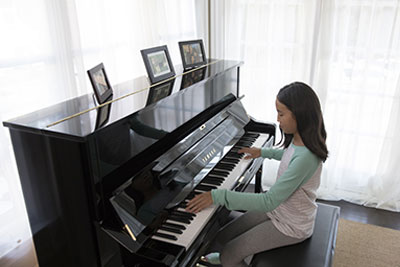
The most requested piano in the world, the Yamaha U1 is available as a new or used piano in the US. Unfortunately, Gray Market Piano resellers often import old U1s into the US, buff them out and sell them to Americans who don’t know their true history or internal condition.
If you’ve been shopping for a name-brand used piano – especially if that name-brand builds its pianos overseas – then you may have heard the term “Gray Market Piano.” Then again, since the companies that promote and sell these pianos often hide their true histories, maybe you haven’t.
Admittedly, the term “Gray Market Piano” sounds dramatic as if purchasing one could be unethical or even illegal, but the truth is much darker. Less reputable American piano retailers use the lure of low prices and pretty looking cabinets to convince you that the Gray Market Piano they are selling is as reliable and valuable as any other used piano made by the same manufacturer… and that they are simply offering it at a lower price because, well… “reasons.” The reality, however, is that the Gray Market Piano they are promoting is a ticking time bomb that could devastate your finances and ruin the piano’s performance with absolutely no warranty or manufacturer support. Worse yet, selling “Gray Market Pianos” is not only perfectly legal in the US, it’s commonplace. …and – if you’re not careful or well-informed – your family could pay the price.
So – before you invest thousands of dollars into any used piano – you need to understand exactly what a Gray Market Piano is, why even the piano’s manufacturer recommends you avoid it, and what could happen if you ignore the warnings and buy one anyway.

Piano Shaped Objects: How to Spot the Instruments That Make Students Want to Quit
If you’ve ever encountered a piano that was so horrible, you couldn’t even call it a proper piano, you’ve encountered a “Piano Shaped Object” (or PSO for short). PSOs can show up when you least expect them – in your church, in your school, in a practice room… or even in a piano teacher’s studio! …and – while the term may sound lighthearted – it describes a serious problem for piano shoppers. PSOs look like regular pianos. They have 88 keys. They have pedals. They have a bench. They might even have beautiful cabinets! …but – underneath it all – they are horrible instruments that can not only damage a student’s playing technique, but even cause a student to quit piano lessons. In fact, in a recent nationwide study of why piano students quit taking piano lessons, an inferior practice instrument rated #1. So how can you identify and avoid a PSO before it ruins your student’s musical future? Thankfully, we can help you with that.
Piano Price Increases Coming Soon!
Yamaha and Roland have announced their Summer, 2026 price increases and time is quickly running out to get your best Summer deal!
Yamaha acoustic pianos, hybrid pianos, Silent Pianos and Disklavier will go up an average of 3-5% on July1, 2026 according to sources at Yamaha. Tuesday, June 30 will be the last day to take advantage of 2025 pricing on these pianos. Currently, Yamaha is also running a 0% APR for 24 months financing program on these instruments… so you have until the end of business on June 30 to get the 2025 price AND special financing on the Yamaha piano of your dreams!

On August 1st, 2026, Yamaha will introduce new pricing for all Clavinova digital pianos as well. Friday, July 31 will be the last day to take advantage of 2025 pricing on Yamaha Clavinova digital pianos. Keep in mind, though, that Yamaha’s 0% APR financing ends July 6 so – if you want to take advantage of 2025 pricing on Yamaha Clavinovas AND enjoy the special financing, you need to do so by July 6, 2026. Our exclusive Yamaha Bonus Box (a $250 value!) will still be free with any Clavinova purchase from Riverton Piano Company!
Finally, Roland has also announced their 2026 price increase date for their digital pianos. August 1, 2026, Roland will be introducing a reorganized pricing structure for all Roland digital pianos and a cost increase of approximately 3% across the board. Friday, July 31 will be the last day to take advantage of 2025 pricing on Roland digital pianos AND benefit from their old pricing structure. Our exclusive Roland Owner’s Club (a $300 value!) will still free with any Roland digital piano purchase from Riverton Piano Company!
 As always, these dates are subject to change. If you’re looking to get a piano, digital piano, player piano or hybrid piano this Summer, don’t wait! Come in now and get the best price, the best TERMS and the best service anywhere in the US!
Should You Buy a New Piano or a Used Piano?
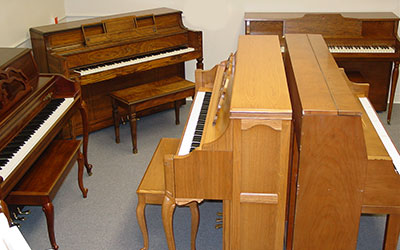 People don’t set out to make a bad piano purchase.
They start with good intentions, a reasonable budget, and maybe a quick internet search for used pianos. An hour later, they’re staring at a 30-year-old upright on Facebook Marketplace, wondering if they’ve just found a hidden gem… or if they are about to inherit someone else’s problem.
Here’s the reality:
A piano isn’t like buying a couch or a TV. It’s a mechanical instrument with thousands of moving parts, and its value has less to do with how it looks—and everything to do with how it’s been treated over time.
That’s why two pianos that look nearly identical can have completely different stories:
One plays beautifully and holds its value; the other struggles to stay in tune and gradually drains your wallet… so, before you decide to purchase any piano (new or used), you need to understand what actually matters—and how to avoid bringing home a lemon.

Best Digital Pianos of 2026
In 2026, digital piano manufacturers continue to refine their instruments’ realism with rich tone engines, graded hammer actions, and improved speaker systems — but only a select few models deliver the responsiveness and musicality that justify a $2,000+ investment.

Of course, you can buy “highly rated digital pianos” for less money, but – as the old saying goes – “you get what you pay for.” Check out my “Truth About Piano Reviews” blog for a more in-depth explanation of the dangers of relying on digital piano “ratings.” It’s not worth sacrificing a satisfying performance, an exciting set of features, or a quality home cabinet design just to save a couple of bucks. As I always say — it’s usually better to spend a little more than you planned than less than you should – especially if you plan to play it every day.
…but how do you know which pianos are worth the investment and which ones aren’t? Well, I’m glad you asked!

Grand Piano Sizes Explained – What Fits and What Sounds Best?
When most people start their piano search, they consider criteria like price, brand, or even appearance. Unfortunately, one important factor that they either fail to consider altogether or consider for the wrong reasons is size. Of course, it’s important that the piano you choose will fit in your space, but most modern homes can accommodate at least some form of baby grand piano. The issue isn’t whether or not it will fit, but how the piano will perform in the space you allow for it. …and you might be surprised at just how much “piano” you can fit into your space if you’re willing to get creative.
Maybe you don’t think you have room for a grand piano at all! If not, this blog is definitely for you. Better understanding grand piano sizes and options can only help you in your search for your “perfect home piano.”

The Truth Behind the Yamaha and Bösendorfer Partnership
 In 2008, the Yamaha Music Corporation acquired the Bösendorfer Piano Company—a strategic move that marked a significant milestone in the history of acoustic pianos. Yamaha’s objective was clear: to solidify its presence in the ultra-luxury market while gaining deeper insights into the specialized craftsmanship of high-end piano manufacturing. For Bösendorfer, the acquisition provided unparalleled access to a premier global distribution network and the robust financial stability of the world’s largest music manufacturer.
Nearly two decades later, the results of this collaboration are evident. The partnership has evolved into a mutually beneficial arrangement that has elevated both brands to new heights of prestige and technical innovation. …but that isn’t the whole story…


