

Selecting a grand piano for your home, school or church is a big decision that requires a significant investment in time and resources. That’s why it’s so important to ensure that the piano you select will perform as intended for as long as possible – especially if it’s a key component of your performance or worship space. So – with that in mind – here are ten ways you can keep your grand piano sounding good for decades to come:
1. Buy a High-Quality Grand Piano

You know the old saying: Buy nice or buy twice. Never has it been more true than with pianos. Because 85% of the instrument is made from wood, the most important way to guarantee your piano’s performance is to make sure you purchase one made from good quality woods in the first place! Discussing What Pianos are Made Of is an entire blog in and of itself, but suffice to say that the better the wood – the better the piano. Buy the best piano you can afford (and follow the ten steps in this blog) and your piano will surprise and delight all who play it for many years to come.
For more information about buying a piano, read our Piano Basics blog or contact us and request our FREE Piano Buyer’s Guide. Most people only buy one piano. You’ll be glad you took the time to make sure you get the right one from the very beginning.
2. Place Your Grand Piano in a Stable Environment
People often ask us “Where Should I Put My Piano?” and with good reason! Finding a safe, stable environment for your piano is vital to its performance quality and longevity. Make sure to put your piano in a stable, climate-controlled space away from direct sunlight, fireplaces, heat vents or humidity sources. The goal is to keep your piano at a stable temperature and humidity setting year-round. In Arizona, this is easier because our outdoor climate is pretty stable most of the year. That is why we do not recommend humidifier systems for grand pianos in Arizona. Never leave your piano in a shed, garage or other non-climate-controlled space for any length of time. This will immediately begin to degrade the piano’s performance quality and shorten its overall lifespan. Also, if you live near the ocean, keep your piano in an interior room where that salty air can’t reach the grand piano’s strings or tuning pins.
3. Follow Recommended Piano Tuning Guidelines
 Another question we often get is “How Often Should I have My Piano Tuned?” We have often said that there’s no point in buying a fine instrument if you aren’t going to maintain it properly. Even the highest quality pianos can only perform well if they are properly maintained. Yes, you should have your piano tuned a minimum of once per year, but – depending on the piano’s use, storage environment and construction – that may not be enough! It’s important to understand what causes a piano to go out of tune and how you can limit those factors. It’s also important to know that new pianos and used pianos have different service needs. For example:
New Grand Pianos: It’s very common for a new piano to need 2-3 tunings in the first year. Some manufactures even recommend four! This is because new pianos are like children. They have to be taught “the rules.” Once you show them how to stay in tune (ie – work the stretch out of their strings, lock the strings around their hitch pins and allow the wood to acclimate to your interior climate), their service needs usually diminish.
Used Grand Pianos: Used grand pianos already know how to stay in tune. Their strings are sufficiently stretched and locked around the hitch pianos and they are “used” to being at a certain tension. While you still have to allow them time to adjust and acclimate to a new interior climate, they should be able to “lock in” after the first couple of tunings.
Of course, not all piano tuners are the same. Make sure the one you hire is a professional piano tuner with years of experience and verifiable reviews or accolades. In fact, Riverton Piano Company has our own, in-house piano tuner that can help you keep your piano sounding great.
4. Clean Your Piano Safely
Using the wrong chemicals to clean your grand piano can actually damage its finish over time. Using the wrong techniques can cause damage to your piano’s soundboard and keys over time – especially if you use liquid cleaners. It’s important to clean your piano safely. That’s why we created our Essential Tips for Safely Cleaning Your Piano video! Watch the video and contact us if you have any questions!
5. Don’t Touch the Piano Strings
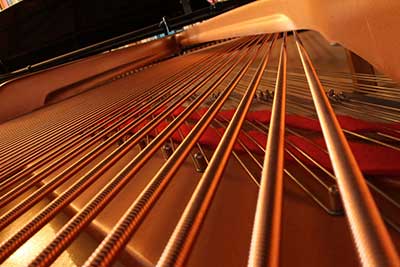 With its brass or nickel plate, steel strings and shining tuning pins, the interior of a grand piano is absolutely beautiful. You might be tempted to reach in and give your piano’s belly a few loving caresses. Unfortunately, this is a very bad idea. The natural oils on human fingers will break down the metal parts of our piano over time. This can cause your strings to lose their tone and even break as they age. Do your best to admire the piano’s belly from afar and – if you need to dust the piano’s interior, used canned air or an extended-handled duster to accomplish the task (see the video link above for more details). Your piano will appreciate your restraint and reward you with years of beautiful sound!
6. Keep Refreshments Away From Your Piano
This may seem obvious to some, but food and drink can be a piano’s biggest enemy. Spilling any liquids on the piano’s keys or soundboard can cause catastrophic damage. Wood does not like being wet – especially thin, fine woods like those found in musical instruments. Food crumbs can also get into the keys and strings – causing problems over time. Even if your food or drink don’t come into direct contact with the piano, their proximity can be a problem. I remember a voice teacher once who complained that her new piano had already developed a crack in its soundboard. I raced out there to see how this could have happened only to find she had an electronic tea kettle sitting on the piano’s lid. The heat and humidity it was generating caused the damage to her piano. It’s just never good to mix eating, drinking and piano playing! I wouldn’t even put live plants on top of a grand piano!
7. Regulate and Voice Your Piano as Needed

Most piano owners know they have to tune their piano a couple of times per year. It’s just like getting an oil change or changing your furnace filters. This regular maintenance keeps your piano in shape and prevents problems down the road. What many people don’t consider, however, is how the continued impacting of felt hammers on metal strings will eventually affect the piano’s tone. When a piano hammer hits a metal string in the same place over and over again, it begins to “impact.” This works just like getting a callus on your finger. The felt develops grooves with hard interiors that will make your piano sound brighter over time. For the most part, this is a normal part of the piano aging process and it’s something you have to consider when buying a new or used grand piano in the first place (Always buy a piano that’s a bit more mellow than you want because it will brighten up as you play it). After some time, however, you may find that your key action has gotten a bit loose (or “sloppy”) and your piano might be brighter sounding than you would prefer. That’s where having a good piano technician comes in. Beyond basic tuning are two techniques that help maintain your piano’s tone and touch: regulation (a process of tightening and correcting your pianos key action so it plays with the control you expect) and voicing (a process of reshaping and filing the piano’s hammers to provide a brighter or more mellow tone as desired). It’s common to have some minor regulation adjustments every couple of years, but voicing is pretty rare and is only done on an “as needed” basis. It is fairly common to voice a piano at least once every ten years and you should never voice a piano that isn’t pro[er;y regulated.
Riverton Piano Company has our own, in-house piano tuner that can help you understand all of these processes more completely.
8. Keep Animals Away From Your Grand Piano
We all love our pets (or “professional mascots”), but we also know that they don’t understand what an investment your grand piano is – nor do they understand how to protect it. From animals relieving themselves to climbing inside to licking everything in sight – we’ve seen how having a pet around your grand piano can be a problem. Luckily, it’s not hard to train your pets to leave your instrument alone. Make the time and effort to do this and your piano will thank you for decades!
9. Only Use Professional Piano Movers
 Another old saying we use alot in the piano business is the one about the “Road to Hell” being paved with good intentions. Using volunteers, custodians or generic furniture movers to move your grand piano is a perfect example. It might save you a little money initially, but the damage these well-meaning folks often do to your piano, your building or themselves will often erase any potential savings. Safely moving a grand piano without damaging it or the people around it requires a combination of experience, training and proper equipment. The relatively small amount of money you’ll spend having a professional piano mover relocate your grand piano is nothing compared to what might happen if you don’t. All you need to do is search “piano moving fails” on YouTube and you’ll see what we mean. Protect your investment. Only use professional piano movers.
10. Never Mic Your Grand Piano
Admittedly, this one is a bit of a cheat… but – if you want your piano to sound good – you should never try to mic it and run it through a PA system. Unless you have a professional studio setup, the microphones you’ll use (and the board you’re likely to run it through) will not be able to pick up all the color and nuance of a natural piano tone. Instead, consider buying a bigger piano that can fill your space organically – or consider a hybrid piano that is designed to interface with a PA system properly. Far too often, I see organizations purchasing inadequate pianos (uprights or baby grands that just don’t have enough power to fill the space) and using a microphone/PA system to make them louder. Unless you have the right condenser microphones (ideally four of them) and tons of studio recording experience, you’re better off using a hybrid or digital piano in these situations.
Well, that’s all, folks! Thank you for reading this blog! I hope it helped you put together a good plan for your home, church or school grand piano! As always we are happy to answer any questions you have in the comments or on the phone! Contact us anytime… and may the love of music lead you to life’s greatest joy! See you next time!


